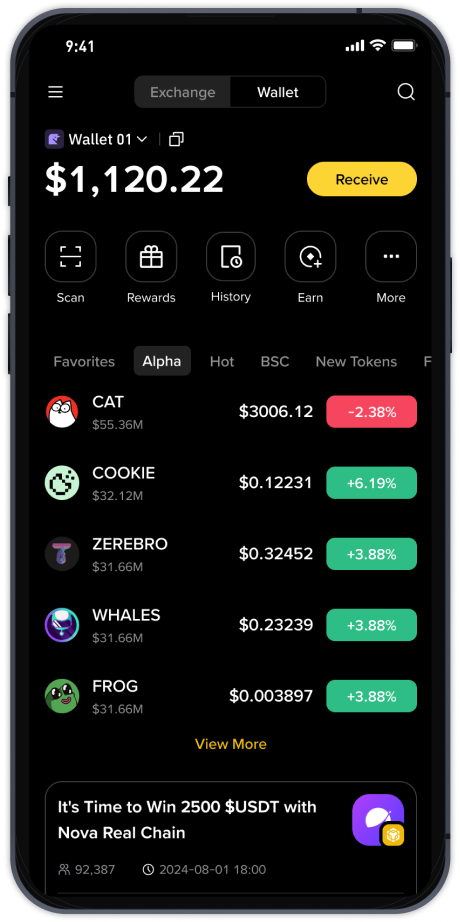
Binance Exchange Overview: Features, Security, and Global Impact in 2025

Binance is widely recognized as one of the largest and most influential cryptocurrency exchanges in the world. Founded in 2017 by Changpeng Zhao, the platform quickly rose to prominence due to its vast selection of digital assets, high liquidity, and aggressive expansion strategies. Today, Binance operates in over 100 countries and supports hundreds of cryptocurrencies for trading, staking, and other financial services.
One of the strongest selling points of Binance is its comprehensive feature set. The platform offers spot trading, margin trading, futures contracts, and options for both retail and institutional investors. In addition to trading, Binance provides a wide range of DeFi services including savings accounts, crypto loans, and yield farming. Users can also participate in Initial Exchange Offerings (IEOs) through the Binance Launchpad, which has been a notable launchpad for many successful blockchain projects.
Security has always been a critical concern for Binance, especially after a major hack in 2019. In response, the platform implemented the Secure Asset Fund for Users (SAFU), an insurance fund that protects user assets in the event of a security breach. Binance also uses two-factor authentication (2FA), advanced anti-phishing codes, and device management controls to safeguard accounts. Regular security audits and bug bounty programs further reinforce their commitment to user safety.
Globally, Binance has faced regulatory scrutiny from authorities in the United States, the United Kingdom, Japan, and several other jurisdictions. To address these challenges, the exchange has been actively pursuing licenses and establishing regional hubs. In 2024 and 2025, Binance formed partnerships with financial regulators in Dubai, Bahrain, and parts of Europe. The exchange also launched Binance US as a separate entity to comply with American regulations. These moves aim to build a more compliant and sustainable operational framework.
Another important aspect of Binance is its native token, BNB. Originally issued as an ERC-20 token on the Ethereum network, BNB migrated to Binance’s own blockchain, the BNB Chain. BNB is used to pay trading fees at a discount, participate in token sales, and cover transaction fees on the BNB Chain. The token's utility and deflationary mechanism—periodic token burns—have made it one of the most valuable cryptocurrencies by market capitalization.
Binance also invests heavily in education and ecosystem development. The Binance Academy provides free blockchain and cryptocurrency learning resources, while the Binance Charity Foundation handles global philanthropic initiatives. These efforts help promote financial inclusion and blockchain adoption, particularly in underbanked regions.
In summary, Binance remains a dominant force in the crypto exchange industry due to its vast feature breadth, constant innovation, and response to regulatory feedback. However, users should always conduct their own research and remain aware of the risks associated with volatile markets and jurisdictional regulatory changes. For those seeking a full-service exchange with deep liquidity, Binance continues to be a top contender into 2025.